

Take your teamfrom vibe codingto orchestrating reliable AI systems.
Recorded lessons you take at your own pace, a challenge on the practice repository after each one, and one live call a week with the two engineers who wrote it. Every lesson is listed further down this page, with the prices.
Programme at a glance
| weeks, depending on tierThree weeks to the Coder tier, five to Orchestrator, seven to Architect. | 3–7 |
|---|---|
| recorded lessonsEvery one of them listed on this page, with its subtopics and its challenge. | 36 |
| live Q&A callEvery week of your tier, 60 to 90 minutes, with both founders. | 1 per week |
| certificates, one per levelIssued at 80% completion of a level, verifiable at a URL anyone can open. | 4 |
| next intakeLessons unlock week by week from the intake start. | November 2026 |
100+ engineers trained across Switzerland, Germany, Poland and Slovakia.4 products built with this methodology.


Your agent is not the problem.The system around it is.
The demo always works. Two weeks later the same agent, on the same repository, writes something that reads correctly and is wrong in a way review does not catch. Nothing about the model got worse. The work got big enough for the missing parts to start mattering: no budget for what goes into the context, no memory that survives the session, and nothing forcing the agent to prove its change works.
Those are systems problems, and systems problems can be taught.
This is the wrong page for you ifyou are learning to program, you want to build the models rather than build with them, or you want to watch rather than build. Every lesson here ends in something you have to make work.
Four levels,and the stage each one takes you to.
You come in as a (Vibe) Coder. Each level below states what it covers, what it costs you in time, and the certificate it closes.
01
Augmented Foundations
Foundations: context, memory and your first skills
- Comes in as
- (Vibe) Coder
- Leaves as
- Augmented Foundations
- 9
- lessons
- 9
- challenges
- 74
- subtopics
Certificate
Skills listed on the certificate
02
Master of AI Augmented Coding
Your setup as a system: subagents, MCP and a first hook
- Comes in as
- Augmented Foundations
- Leaves as
- Augmented Coder
- 9
- lessons
- 4
- challenges
- 41
- subtopics
Certificate
17 certified skills
03
Master of AI Augmented Orchestration
Orchestration: multi-level systems, running in parallel
- Comes in as
- Augmented Coder
- Leaves as
- Augmented Orchestrator
- 9
- lessons
- 9
- challenges
- 63
- subtopics
Certificate
25 certified skills
04
Master of AI Augmented Architecture
Team infrastructure: loops, distribution and governance
- Comes in as
- Augmented Orchestrator
- Leaves as
- Augmented Architect
- 9
- lessons
- 6
- challenges
- 43
- subtopics
Certificate
32 certified skills
The whole programme,one level at a time.
Four levels, 36 recorded lessons, 221 named subtopics and 28 challenges. Nothing here is hidden behind a form.
Level 1
Augmented Foundations
9 lessons / 9 challenges
- 1.01
Foundations: Agents, Tokens and Context
What is Claude Code, the agentic paradigm, tokens & context, Opus capabilities, the mindset shift from coder to orchestrator.
- 1.02
Meet the Practice Repository
Meet the Practice Repository · What the Practice Repository Is
- 1.03
Prompting Practice: Ship a Feature
Practical exercise: Add a feature using Claude. Task breakdown, constraints, incremental implementation.
- 1.04
Commands and Memory: Your CLAUDE.md
Keyboard shortcuts, operating modes, slash commands, CLAUDE.md, file imports, context priming.
- 1.05
MCP Servers: Extending Claude's Reach
Model Context Protocol: what it is, why extend capabilities, installing servers, context pollution warning.
- 1.06
Skills, Part 1: Run Ours, Write Your Own
Auto-discovered workflows, SKILL.md structure, triggers, when skills make sense vs commands.
- 1.07
Git and Code Review With the Agent
Practical exercise: Commits, /review, PR descriptions, merge conflicts with Claude.
- 1.08
Anti-Patterns to Avoid
Anti-patterns to avoid, one-word checkout, homework checklist.
- 1.09
Skills, Part 2: Composition, Subagents and Limits
Skills: Composition, Subagents & Limits · A Skill That Dispatches a Subagent
Level 2
Master of AI Augmented Coding
9 lessons / 4 challenges
Finishing this level takes you to Augmented Coder
- 2.01
Skills, Advanced: Usage and Composition
Auto-discovered workflows, SKILL.md structure, triggers, when skills make sense vs commands.
- 2.02
Worked Example: A Cross-Browser Support Skill
Auto-discovered workflows, SKILL.md structure, triggers, when skills make sense vs commands.
- 2.03
The Skill, Agent and Hook Architecture
Commands vs. Skills vs. Subagents vs. Hooks. When to use each. The orchestrator pattern.
- 2.04
Subagents: What They Are
Subagent basics, the orchestrator-worker pattern, Agent Teams with Opus, parallel execution.
- 2.05
The Orchestrator-Worker Pattern
Subagent basics, the orchestrator-worker pattern, Agent Teams with Opus, parallel execution.
- 2.06
Build Your First Subagent
Practical exercise: Create a personalized unified development workflow with enforcement thinking.
- 2.07
Build Your First Safety Hook
Practical exercise: Create a personalized unified development workflow with enforcement thinking.
- 2.08
Build Your First Orchestrator on Your Own Repository
Advanced exercise: Build systems (not prompts) on your real codebase. The system building cycle, agent debugging, terminology mapping, zombie process management, and autocode improvement patterns.
- 2.09
The /insights Command: Learn From Your Own Sessions
Built-in command that analyzes your Claude Code sessions and generates personalized recommendations.
Level 3
Master of AI Augmented Orchestration
9 lessons / 9 challenges
Finishing this level takes you to Augmented Orchestrator
- 3.01
The Three-Layer Model and the Gate-Check
Warm-Up · You Start With a Working Orchestrator · Three Layers, One Folder
- 3.02
Build a Multi-Layer Orchestrator
Three Clean Layers: a Choice, Not a Constraint · The Real .claude/ Tree You Are Building
- 3.03
Nested Subagents: The Boundary Is a Choice
The Boundary Is Now a Choice · The Rule You Learned Was a Constraint
- 3.04
Parallel Execution With Git Worktrees
Why Parallel Work Needs Isolation · The Raw Mechanics: git worktree
- 3.05
Self-Correction Loops and Structural Requirements
Where the Loop Lives: Layer 1, Not Layer 2 · Three Ways to Verify
- 3.06
Hooks, Permissions and Security
Practical exercise: Permissions, deny rules for sensitive files, team-ready CLAUDE.md templates.
- 3.07
Let It Run Safely: Read-Only Database Access
Let It Run: Safely · Live: The Database Is Read-Only Now · Why You Can Let It Run Unattended
- 3.08
Architecture, Platform Features and Folder Layout
25 Skills: Flat Discovery vs. a Readable Tree · Regenerate the Flat Symlinks
- 3.09
Capstone: Design Your Agent System
What /design-agent-system Does · The Plan It Returns · Peers, Not a Hierarchy
Level 4
Master of AI Augmented Architecture
9 lessons / 6 challenges
Finishing this level takes you to Augmented Architect
- 4.01
The Autonomy Spectrum and the Context-Window Wall
Recap and Reframe · The Autonomy Spectrum · The Context-Window Wall
- 4.02
Beyond the Orchestrator: Autonomous Loops
A Different Point on the Spectrum: The Convergent Loop · One Prompt, Run It Again
- 4.03
Hands-on: Build a Convergent Loop
Advanced Use Cases: The Convergent Loop · Same Loop, Different Done-Condition
- 4.04
Workflows: Coded Multi-Agent Orchestration
Control Flow as a Script, Not a Prompt · Fan-Out vs Pipeline vs Barrier
- 4.05
A Tour of Other Patterns
Pipeline / DAG · Generator–Critic · Swarm / Blackboard & Event-Driven
- 4.06
Extend a Living Setup
A Real Production .claude/ · Name the Real Parts · What's Good vs What Has Rotted
- 4.07
Distributing Your Setup: Plugins and a Marketplace
What a Plugin Bundles · A Private Marketplace Is a Git Repo · Shared vs Personal CLAUDE.md
- 4.08
Governing and Evaluating Shared Infrastructure
Ownership: CODEOWNERS for Skills · Versioning & the Skills Graveyard
- 4.09
A Custom Team MCP: Demo and Spec
A Narrow Tool Surface · Showcase + Take-Home Spec
Lesson titles, durations and challenge names come from the live course database, tidied up for reading. Add a lesson there and it appears here on the next export. The live workshop also runs 8 short opening, recap and closing sessions (85 minutes in total). They only make sense in a room full of people, so they are not listed here and not counted above.
We do not just teach this. We ship with it.
Four products in five months. This is where we apply the method ourselves, test what is new, and find out what is actually worth teaching. Every panel is a screenshot of running software, not a mockup.

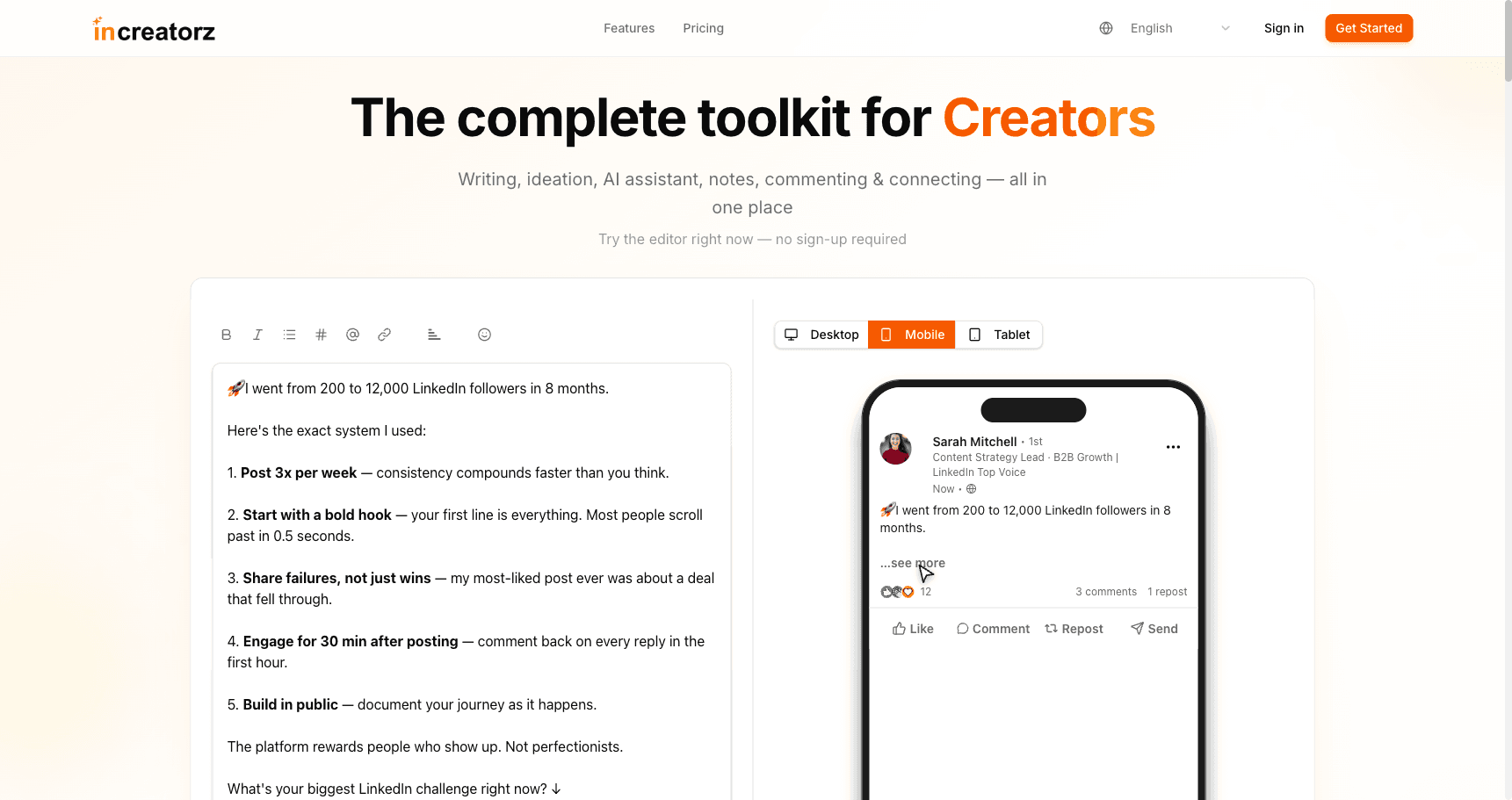
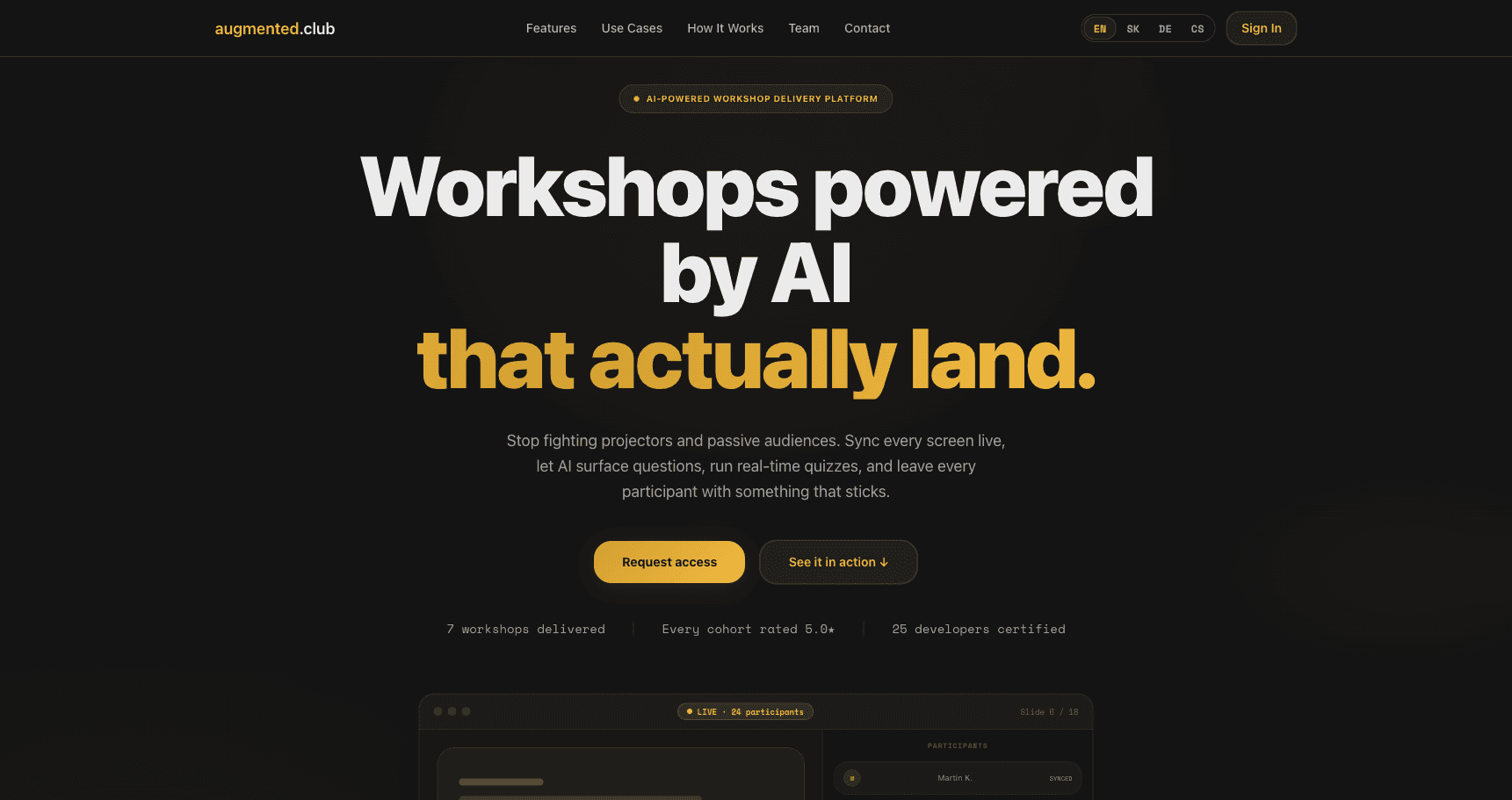
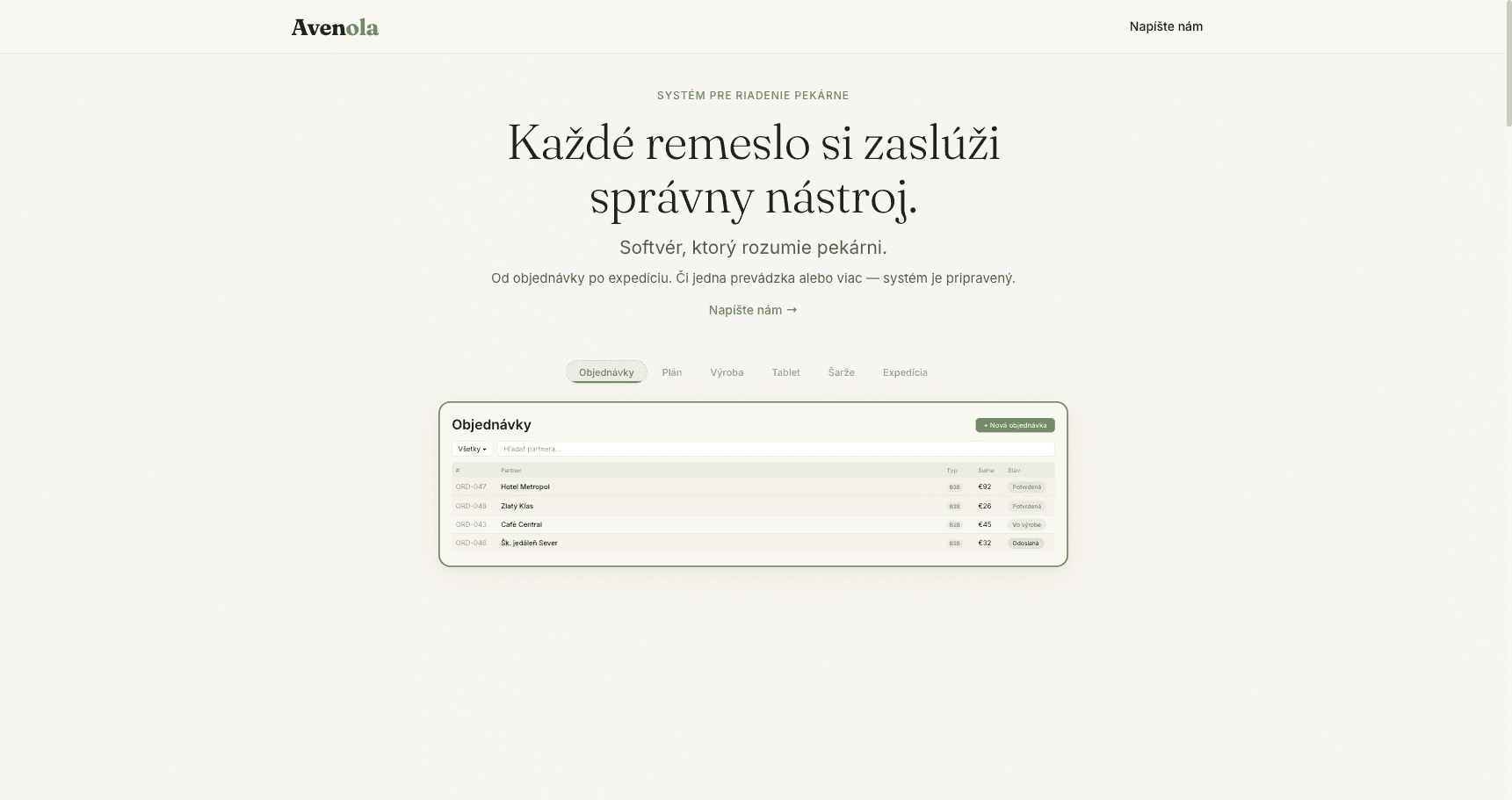
Will this be obsolete in six months?
No. Here is the honest split: two lists, and one of them is short.
What changes
Model versions
A new top model lands every few months.
Context window sizes
The number changes; budgeting for it does not.
Which tool your employer picks
That decision is rarely yours.
Which editor you sit in
Everyone has a favourite. Nobody agrees.
Pricing and rate limits
Repriced without notice, routinely.
Product names and menu labels
Renamed between releases.
What holds
Token and context budgeting
Foundations: Agents, Tokens and Context
Skills written as files
Skills, Part 1: Run Ours, Write Your Own
The Model Context Protocol
MCP Servers: Extending Claude's Reach
Subagent architecture
The Skill, Agent and Hook Architecture
Hooks, permissions and enforcement
Hooks, Permissions and Security
Verification and self-correction loops
Self-Correction Loops and Structural Requirements
How orchestrators are structured
The Three-Layer Model and the Gate-Check
Isolation and parallelism
Parallel Execution With Git Worktrees
Distribution and governance
Governing and Evaluating Shared Infrastructure
Every row on the right is a lesson in the programme, named as it appears in the curriculum below.
The evidence is the lesson list
Of 36 lessons, 35 name no product, model or vendor in their title. They teach a standard: context budgeting, skills as files, MCP, subagent architecture, hooks, verification loops, how orchestrators are put together. The other 1 name the tool we currently teach in, because you have to type into something.
What moving to another tool actually costs
A skill is a file
A markdown file with a short header and a body. It says when to trigger and what to do. It is not a binary and it is not hosted anywhere, so it copies to another tool the way any file does.
Your setup converts with a script
Memory files, permission rules, MCP server definitions and subagent specs are all text in version control. Moving them means converting text, not writing it again.
What you re-check is behaviour
After a switch you re-run your checks and confirm the new tool respects your rules. That is an afternoon, not learning it all again.
Pick the level you want to reach.
The same four levels, two ways to take them: on your own schedule with a weekly group call, or in the room with a facilitator. Pick the format, then the level you want to reach.
One group call a week, live with the lecturer, for Q&A and support. Everything else you take at your own pace.
In every tier
Weekly live Q&A call, 60 to 90 minutes, with both founders
Certificate per level at 80% completion, verifiable online
12 months of access to your lessons, plus Augmented community membership
Slides in English, Polish, Czech, German or Slovak
Full refund through the end of week one
Good to know
Sold per seat. There is no minimum group size.
Lessons unlock week by week from the intake start, so the programme has a pace even though you set your own hours.
Lesson updates are published quarterly and sold separately. Your twelve months cover the programme as it stands today, plus community membership.
Upgrade to a higher tier at any time and the amount you already paid comes off the price.
The self-paced lessons are the same lessons the in-person teams get in the room.
Checkout is by email: the form below is pre-filled with the tier, and we reply with the invoice and the start date. Prices are per person, excluding VAT. Paying through your employer? Send them the methodology page: it carries the team pricing and the governance material a manager asks about, so you do not have to.
The parts that are not a lesson.
How the weeks are shaped, what language you can work in, and what catches you if it turns out not to be for you.
Next intake
November 2026
The format
Video lessons with the slides, in your language
Each lesson is the recorded workshop lesson plus its slides. Slides render in English, Polish, Czech, German or Slovak.
New lessons unlock every week
From the intake start, a week's lessons open as you finish the week before. You cannot binge it in a weekend, and that is deliberate: the challenges need your repository to catch up.
A challenge on the practice repository after every lesson
You submit what you built. Questions and submissions are written, in your own time, in your language, answered in yours.
One live Q&A call a week, 60 to 90 minutes
With both of us. Bring the thing that did not work. Calls run in English; you do not have to speak on one.
A certificate per level, verifiable by URL
Complete 80% of a level's lessons and challenges and the certificate for that level is issued, with the skills it covers listed, at an address anyone can open.
12 months of access, plus community membership
Your lessons stay open for twelve months, and the same twelve months include membership of the Augmented community, where you can ask questions and follow what other people are building. Lesson updates are published quarterly and sold separately, so what you buy is the programme as it stands on the day you buy it.
Time it takes Roughly 3 to 4 hours of lessons a week for the tiers, plus the time you spend applying each lesson to your own code. Most people budget one evening for lessons and one for the challenge.
Your language
Lesson slides render in your language. Challenge submissions and questions are written, in your own time, in your language, answered in yours. The weekly call runs in English, but nothing in the programme requires you to speak on it.
- English
- Polski
- Čeština
- Deutsch
- Slovenčina
This matters most to engineers who read English fine and would rather not be judged on their accent.
Your safety net
- 01
Run the level check before you pay anything
A read-only prompt you paste into your own AI coding tool. It reads your setup and your recent sessions, and the level is decided by us rather than by your agent, so the same setup always scores the same. You see the whole record before anything is sent.
- 02
A free diagnostic call
Thirty minutes with one of the two people who wrote the programme. No pitch. If the level check says you are already past the stage you were aiming for, we say so and you keep your money.
- 03
A free pre-assessment
Every engineer is assessed before day one, so nobody pays to sit through what they already know. If the assessment puts you above a tier, we point you at the one that starts where you actually are.
- 04
Full refund through the end of week one
Work through the first week. If it is not what you wanted, tell us and we refund in full. No form, no retention call.
- 05
Nothing you build is stranded
Skills, prompts, context files and MCP servers are just files, and files move. Your setup converts with a script. After a switch you re-check behaviour; you do not write it all again.
- 06
The same lessons the in-person teams get
This is the four-day workshop we run for Swiss and German engineering teams, cut into a self-paced track. Same lessons, same challenges, same two people on the weekly call.
Find out where you actually stand, in five minutes.
Paste one instruction into your AI coding tool. It reads your setup and, where the tool allows it, how you actually worked in recent sessions, then rates forty published metrics. It does not decide your level: we do, from those ratings, so the same setup always scores the same.
It only reads. It shows you the exact record before it asks, and sends nothing unless you say yes. The record is forty ratings and two sentences: no code, no file paths, no repository or company names.
What it does
- Reads your memory files, skills, subagents, hooks and MCP config
- Reads how you actually work in recent sessions, where your tool allows it
- Rates forty metrics across ground, reuse, control, orchestration and scale
- Names one gap and the smallest change that closes it
- Shows you the record, asks, and emails you a private report only if you agree
paste into your agentI want an honest read on how I actually work with my AI agents. Fetch https://augmented.club/assessment.md and follow it. Ask me before sending anything.
Works in Claude Code, Cursor, Codex, or anything that can fetch a URL. Your agent reads the instructions and follows them on your machine.
https://augmented.club/assessment.md
Practitioners, not lecturers.
The founders who shipped 4 products in 5 months teach every session.

Adam Bilišič
Founder & AI-Augmented Coding Expert
12+ years of professional experience. Ex-CTO of a Swiss company with 8+ years leading teams for enterprise clients. Expert in RAG systems and AI agent architectures.

Jerguš Frajt
Founder & Senior AI Engineer
10+ years as a full-stack engineer. Delivered complex solutions for Swiss enterprise clients. Expert in AI systems and development workflows.
What engineers said after the room went quiet.
Real reviews from real attendees. Enersis, Paysy, Treetek, Netze-BW, and more.
“I loved the workshops, they were both fun and very beneficial. Highly recommend. Exceeded my expectations 300 percent or more!”
Maciej Wroblewski
Unravel
“I was looking forward to this knowing it would be amazing, and it turned out better than expected!”
Dejan Biljecki
Enersis
“As a PO, I now know how I can use Claude in my daily work, and I know it will improve efficiency and accuracy tremendously. I will definitely automate tiresome tasks. Full recommendation!”
Antje Naumburger
Product Owner, Enersis
“I learned a lot of concepts using Claude Code. I got many ideas for the project I am currently working on, and feel a lot safer using the core features.”
Henrik Holke
Treetek
“Day 3 was a very tough day, but I liked it very much and I have learned a bunch of stuff. Very technical and hands-on. Thank you very much!”
Burak Bakir
Netze BW
“Very insightful and practical, hands-on first day, learned a lot!”
Anna Horst
Enersis
What happens when a whole team learns to build with AI
enersis ran our programme across engineering, HR and operations. Here is what changed, in their words.
What changed in the business?
0:46
One of your team built a tool just for himself. What happened to it?
“He built a small chatbot for himself to discuss those specs. This was the spark that lit the fire. This chatbot is now part of our product, and we are MVP-ing it for our customers.”
0:29
How did the cohort change your own workload?
“I'm delivering more with what feels like less stress and less workload, plus I have time for the side projects that bring value to the company.”
The honest answers.
The programme
No. Every challenge runs on a shared practice repository, so you are never blocked by what you are allowed to push to at work, and nothing you try can break something real. What you build is still yours to keep: skills, memory files, MCP configuration, hooks and subagents are all files, and you carry them into your own repositories afterwards.
No. Prompting is level 1 material and it is the smallest part of it. The programme is about what sits underneath: what goes into the context and what it costs, memory that survives a session, subagents with real job boundaries, hooks that refuse a command, and loops that are not allowed to claim success until a real command has run and passed.
Most of it names no vendor, model or product, so it survives the next release. The section above on this page lists exactly which lessons name the tool we currently teach in and which do not, so you can judge that for yourself rather than take our word for it.
We build on Claude Code because it is currently the strongest harness for this work. It is not a dependency. Skills, prompts, context files and MCP servers are portable, and configuration can be migrated by script to other harnesses such as OpenCode. What needs re-validating after a switch is behaviour, since a different model responds slightly differently to identical configuration. The method and the artifacts survive.
Format and time
Roughly 3 to 4 hours a week of lesson time, depending on the tier, plus whatever the challenge takes you. Lessons are recorded, so you decide when. The one fixed point is the live call, once a week.
One call a week, 60 to 90 minutes, with both founders. It is for questions about what you are building and where it is not working. You never have to speak, and questions written in advance get answered on the call.
Lessons unlock week by week from the intake start, so the group moves together even though the lessons are recorded. The next intake is November 2026.
12 months of access to your lessons, and the same 12 months of membership in the Augmented community, where you can ask questions and see what other people are building. Lesson updates are not included: we publish them quarterly and sell them separately, so what you buy is the programme as it stands today.
Certificates and language
A setup you built yourself, as files you can carry into any repository, and one certificate per level you finish. The certificate lists the named skills it covers and resolves at a URL anyone can open, so it is checkable rather than decorative.
Complete over 80 percent of a level's lessons and challenges and the certificate for that level is issued.
Slides are available in five languages and you can write your challenge submissions and questions in yours. Calls run in English, and nobody is obliged to speak on them.
Price and risk
Run the free level check on this page before you pay anything. It reads how you already work and tells you which level to start at. If you still land wrong, upgrading credits everything you have already paid.
Full refund through the end of week one, no reason required. Before that there are three free steps: the level check on this page, a diagnostic call, and the pre-assessment.
Yes. Tell us in the form at the bottom and we will invoice the company rather than you. If you want several seats or the in-person format for a whole team, say so there and we will come back with both options.
You have seen every lesson and every price. Now decide.
Start with the free level check if you are not sure where you belong. It costs nothing, it takes a few minutes, and it tells you which level to buy.
Tell us where you are. We reply with the tier and the start date.
Paste the summary from the level check if you ran it, or just say what you are stuck on. One of the two engineers who wrote the programme answers, usually within a day. No pitch, no call required.